Affiliate Disclosure: This page contains affiliate links. If you purchase through one of these links, we may earn a commission at no additional cost to you. Learn more.
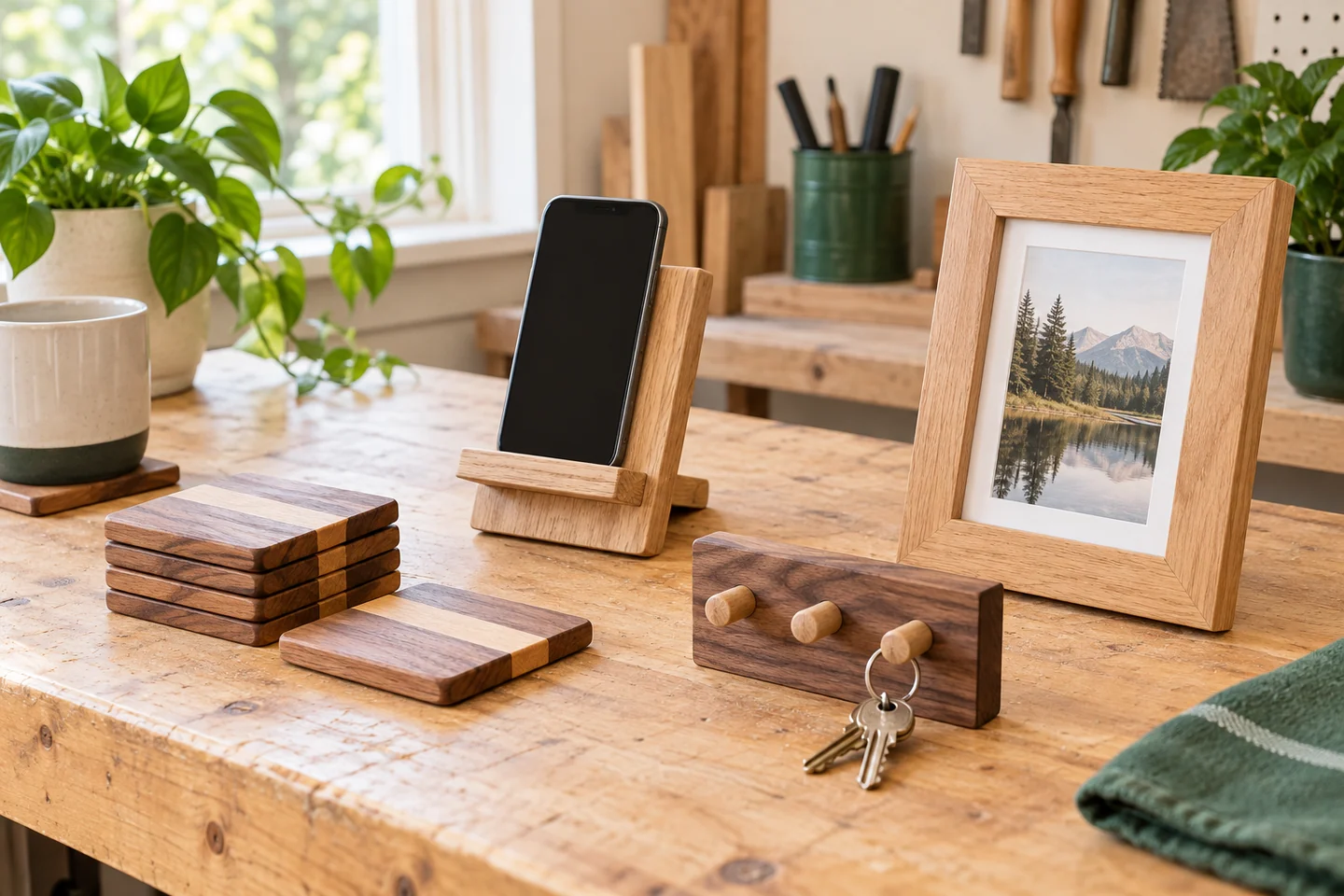
Start with a useful object that matches the tools and time you have. The projects below offer approachable ways to practice measuring, surface preparation, assembly, and finishing. Each has a guide with planning considerations; none requires you to claim a tested result from a photograph.
“Easy” means the first decisions are manageable, not that every variation is safe without a plan. A coaster set asks different questions from a birdhouse or a tray. Use the notes here to choose the kind of skill you want to try first, then open the individual guide for more context.
What Makes a Project Beginner-Friendly?
A good first project has a clear purpose, a limited number of components, and a way to check fit before permanent assembly. It should suit your tools and your workspace. Favor sound wood, accessible joints, and a finish appropriate to the object’s real use. If the design must carry weight, mount to a wall, or serve wildlife, follow a plan that addresses those requirements.
These 15 choices are ordered as a menu, not a difficulty ranking. Try a compact item if you want to practice handling and finishing. Choose storage or display if measuring around real belongings sounds more interesting.
15 Projects to Explore
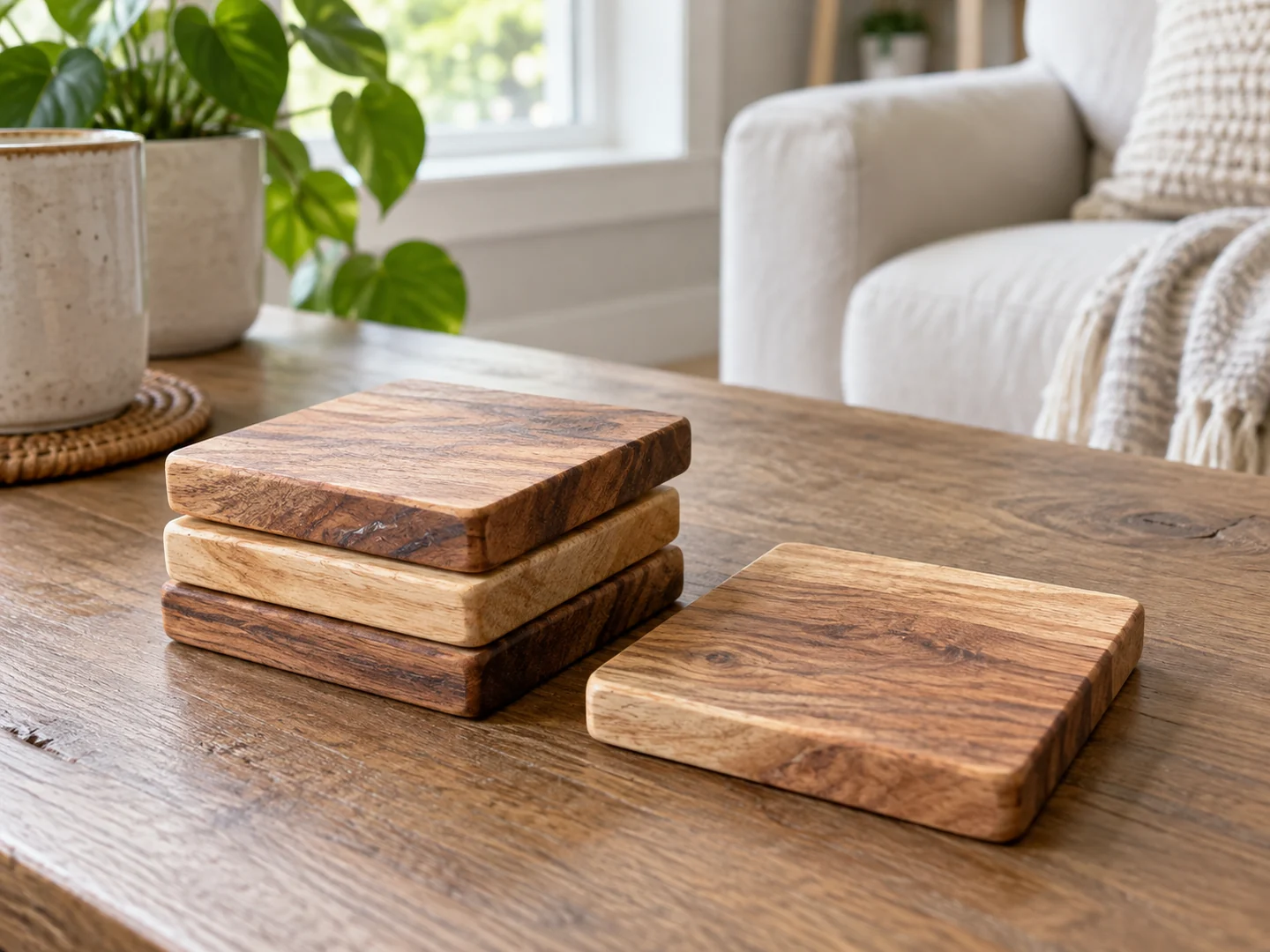
Easy Scrap Wood Coasters for Beginners
A coaster set keeps the work small while giving you practice making matching pieces and a surface that feels smooth in the hand. Choose sound wood and a finish suited to everyday cups.
Read Project →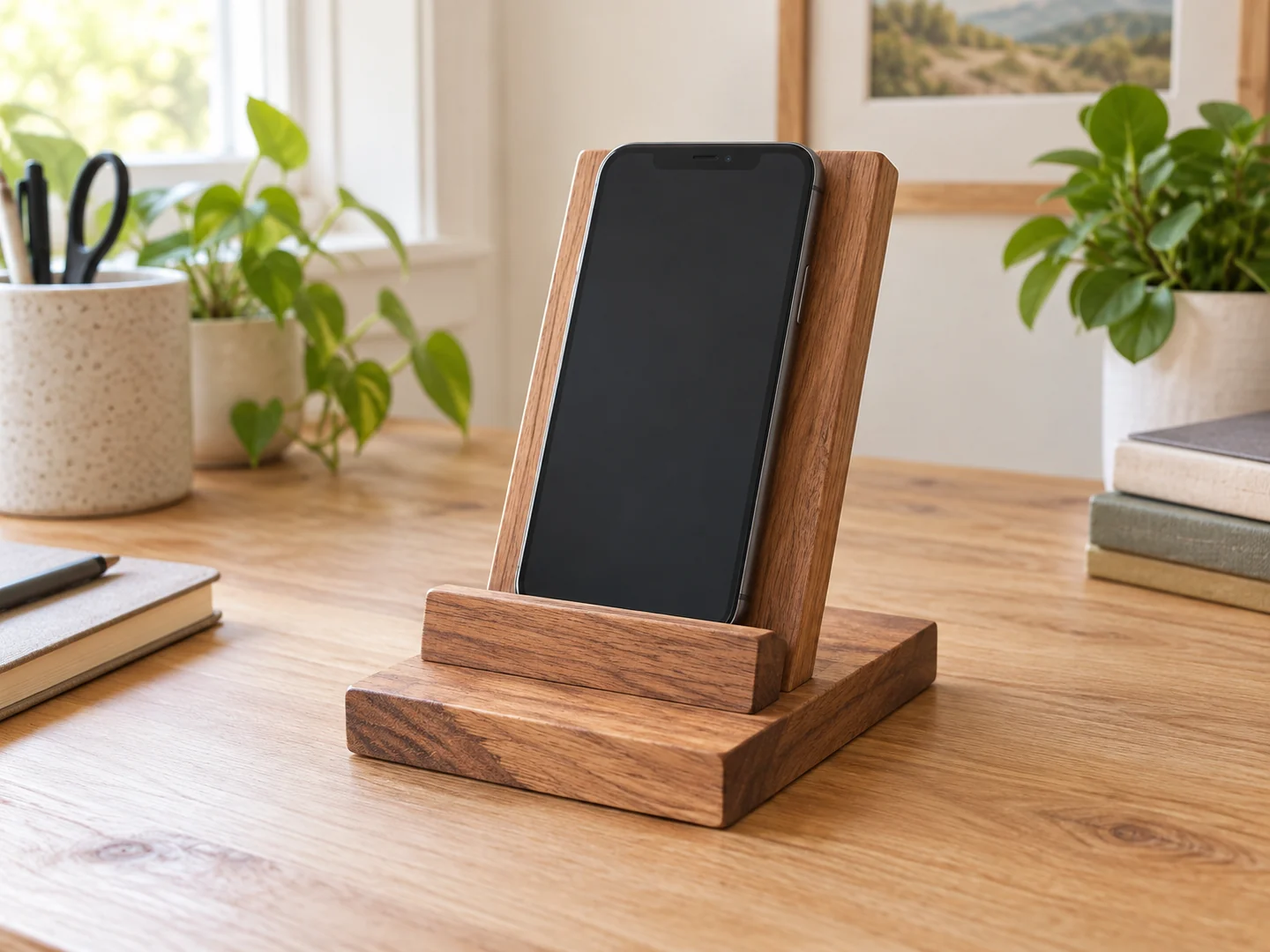
Easy Scrap Wood Phone Stand for Beginners
A phone stand invites you to test one useful detail before cutting: the viewing angle. A cardboard mockup can help you check case clearance and balance without committing good wood.
Read Project →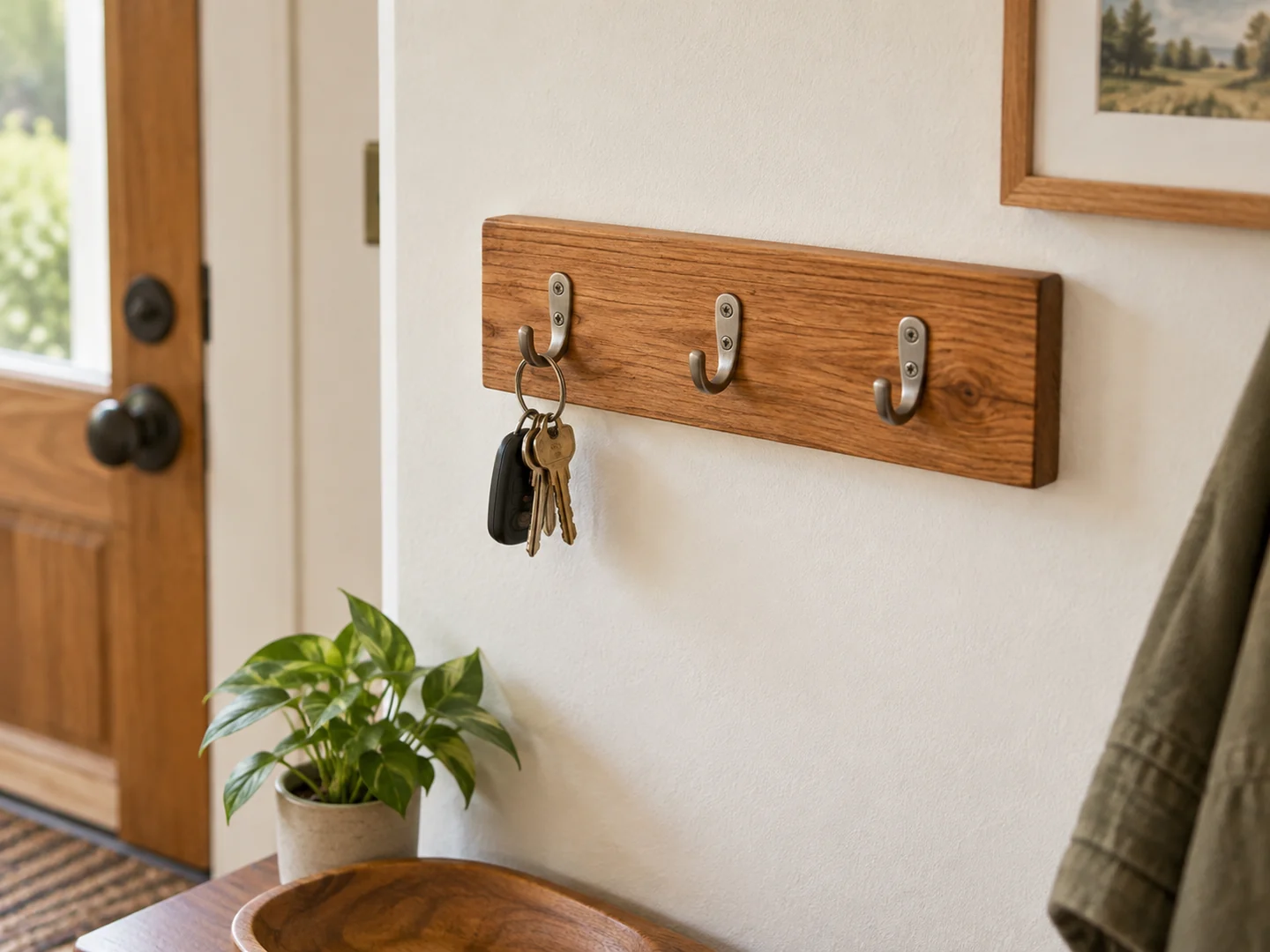
DIY Scrap Wood Key Holder for Beginners
This entryway piece combines a simple board with clearly spaced hooks. You can focus on a flat backboard and finish, then choose mounting hardware suited to your wall and expected load.
Read Project →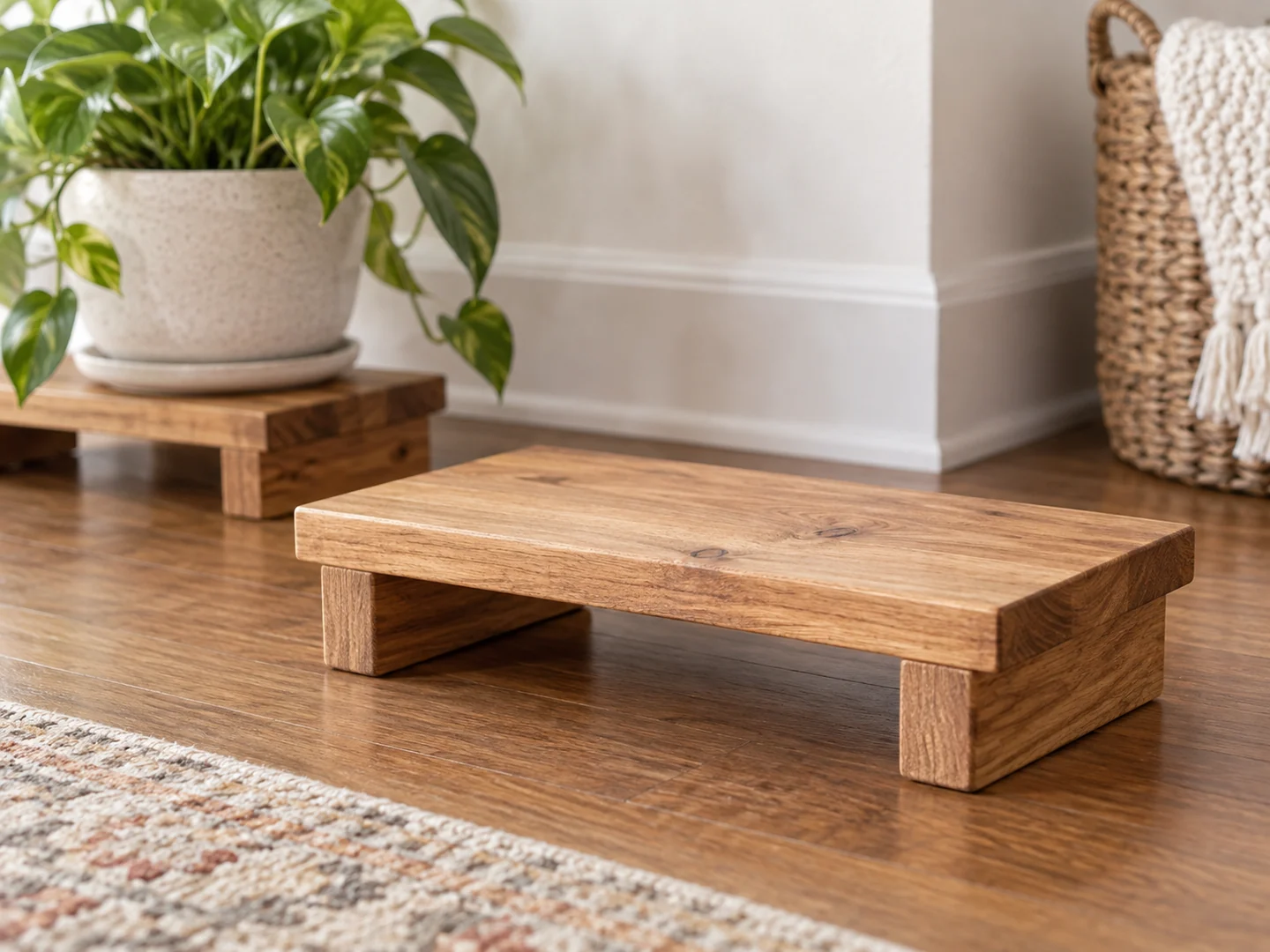
Easy Scrap Wood Plant Riser
A modest riser introduces level, stability, and a little joinery. Plan around the actual pot, saucer, and water weight rather than choosing proportions only from a photo.
Read Project →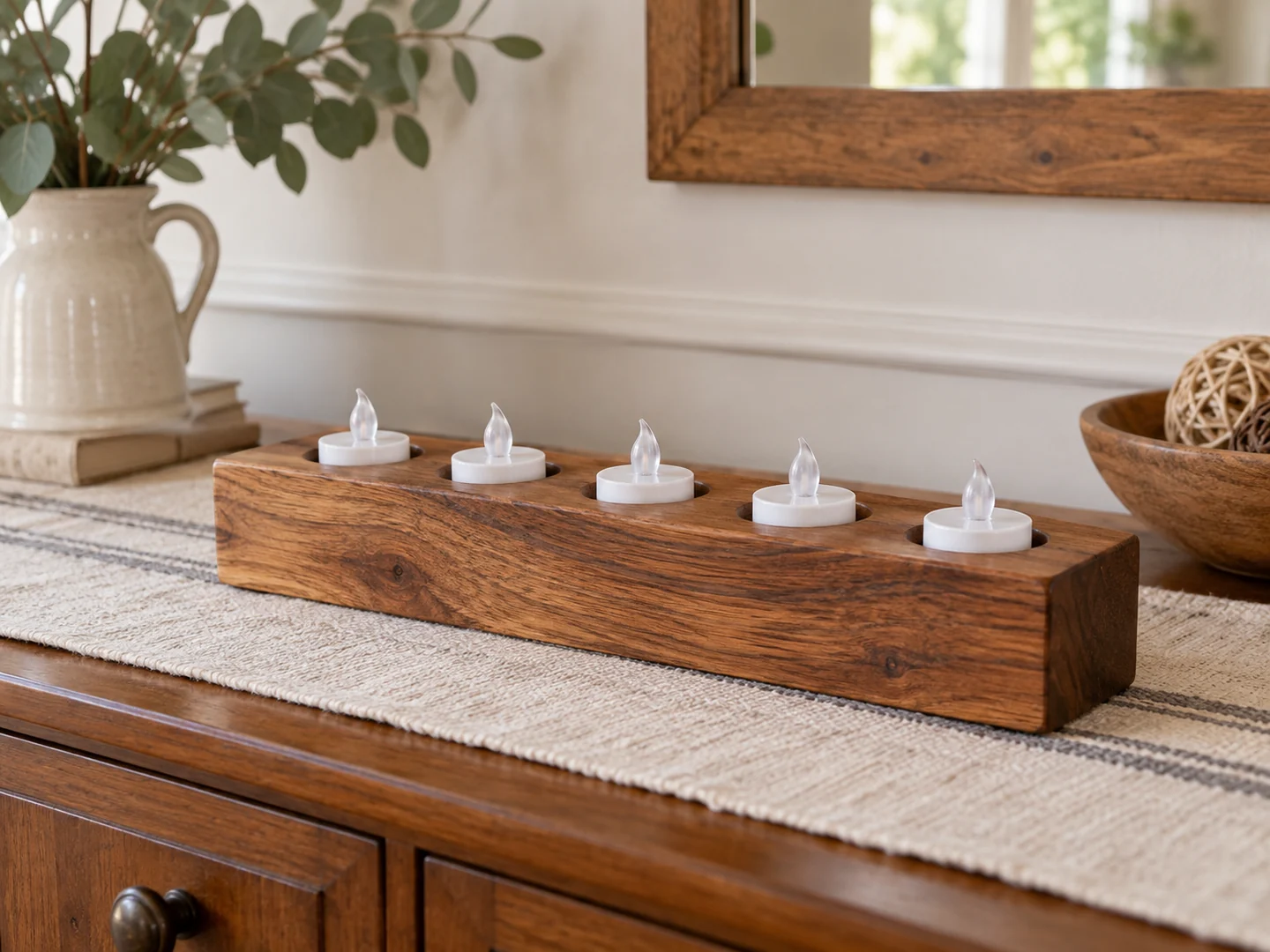
DIY Scrap Wood Candle Holder
A holder designed for flameless LED candles lets you explore recesses, edges, and warm finish without placing open flame next to wood. Check the fit of the LED lights you own.
Read Project →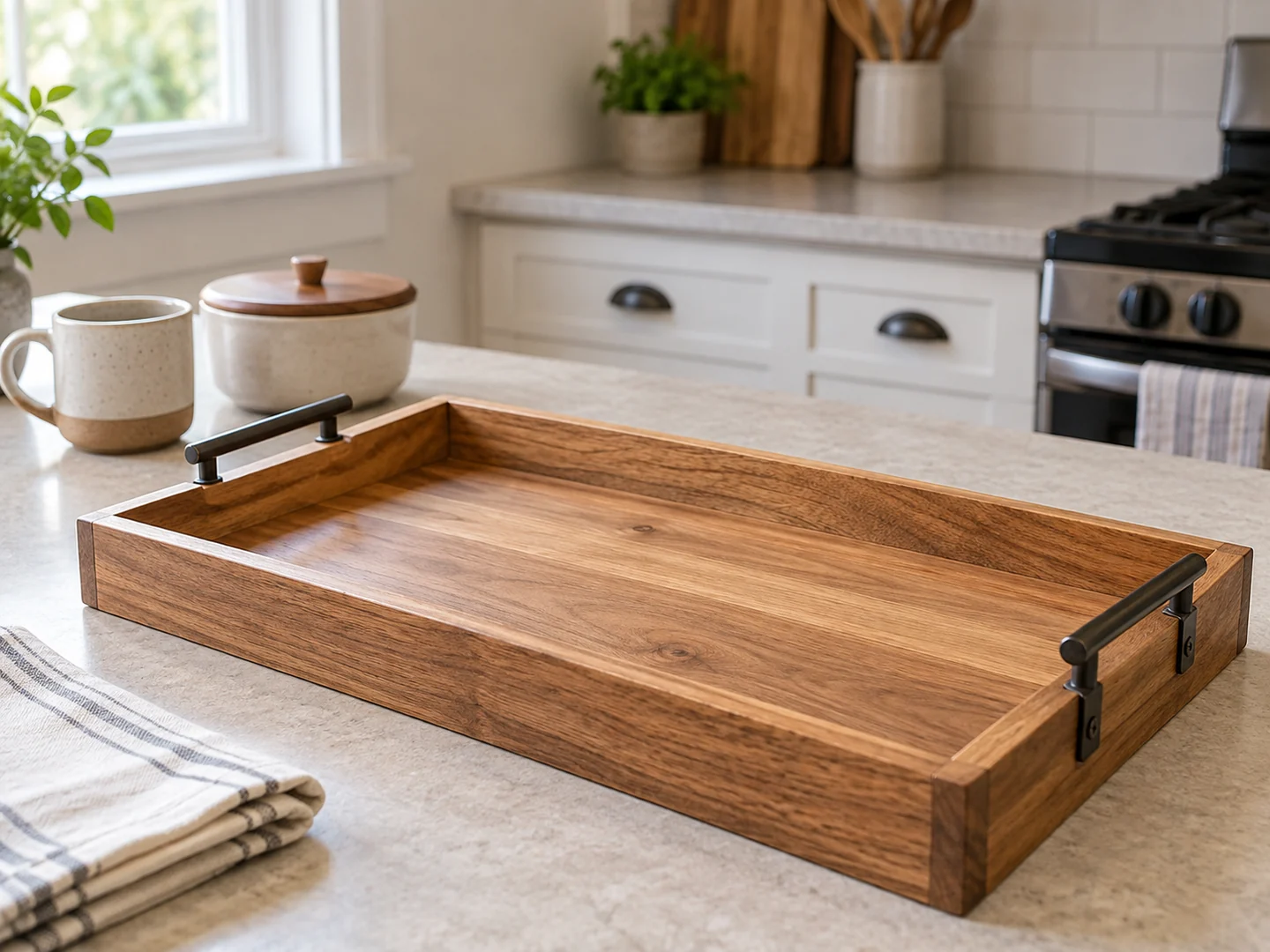
Easy Scrap Wood Serving Tray
A serving tray adds the useful challenge of a supported base and comfortable grips. Begin with a compact plan and think through the items you will carry before selecting the sides.
Read Project →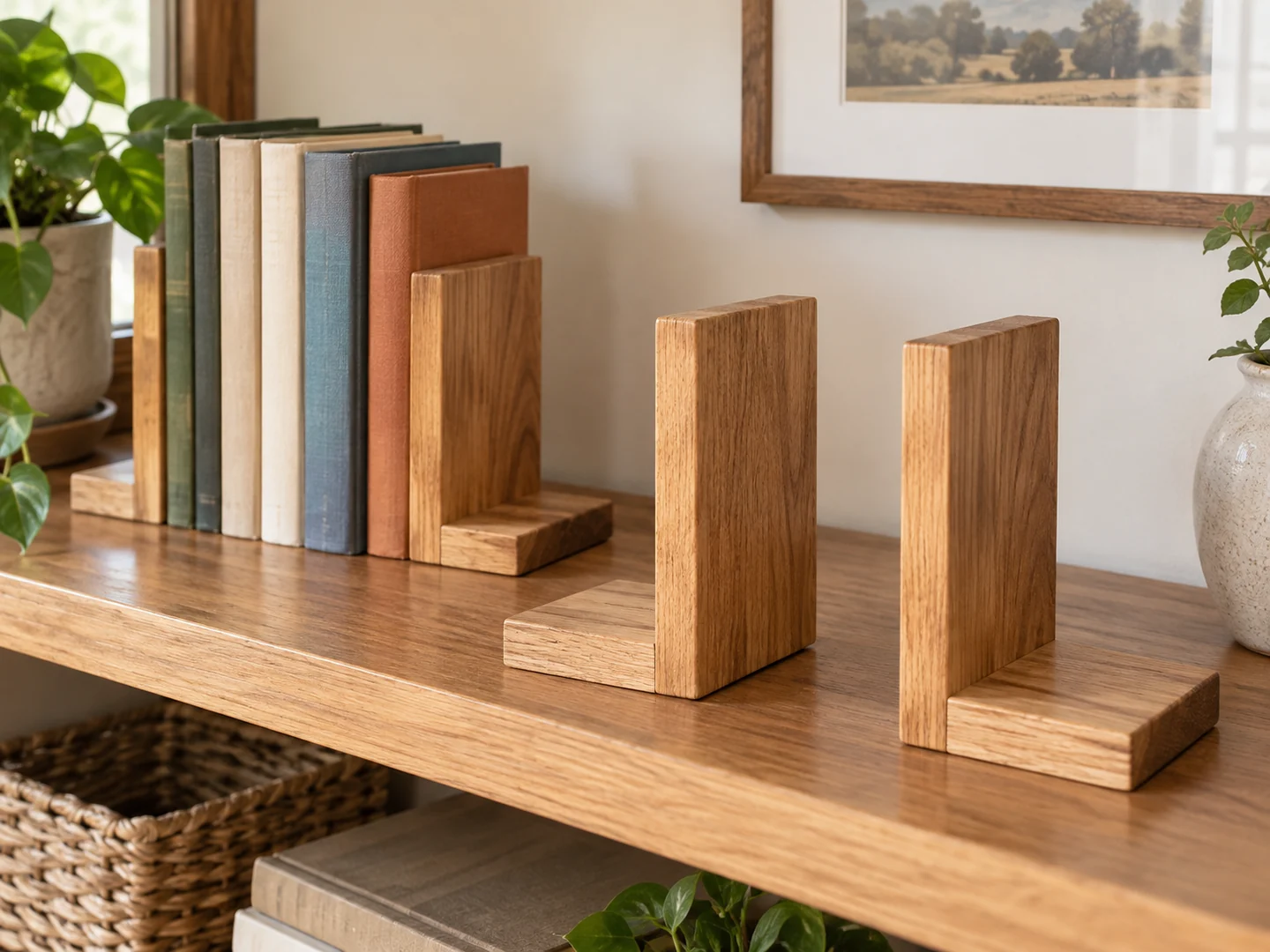
Easy Scrap Wood Bookends
Bookends teach you to compare appearance with function. A small pair can be simple to shape, but test whether the base resists sliding under the books you actually use.
Read Project →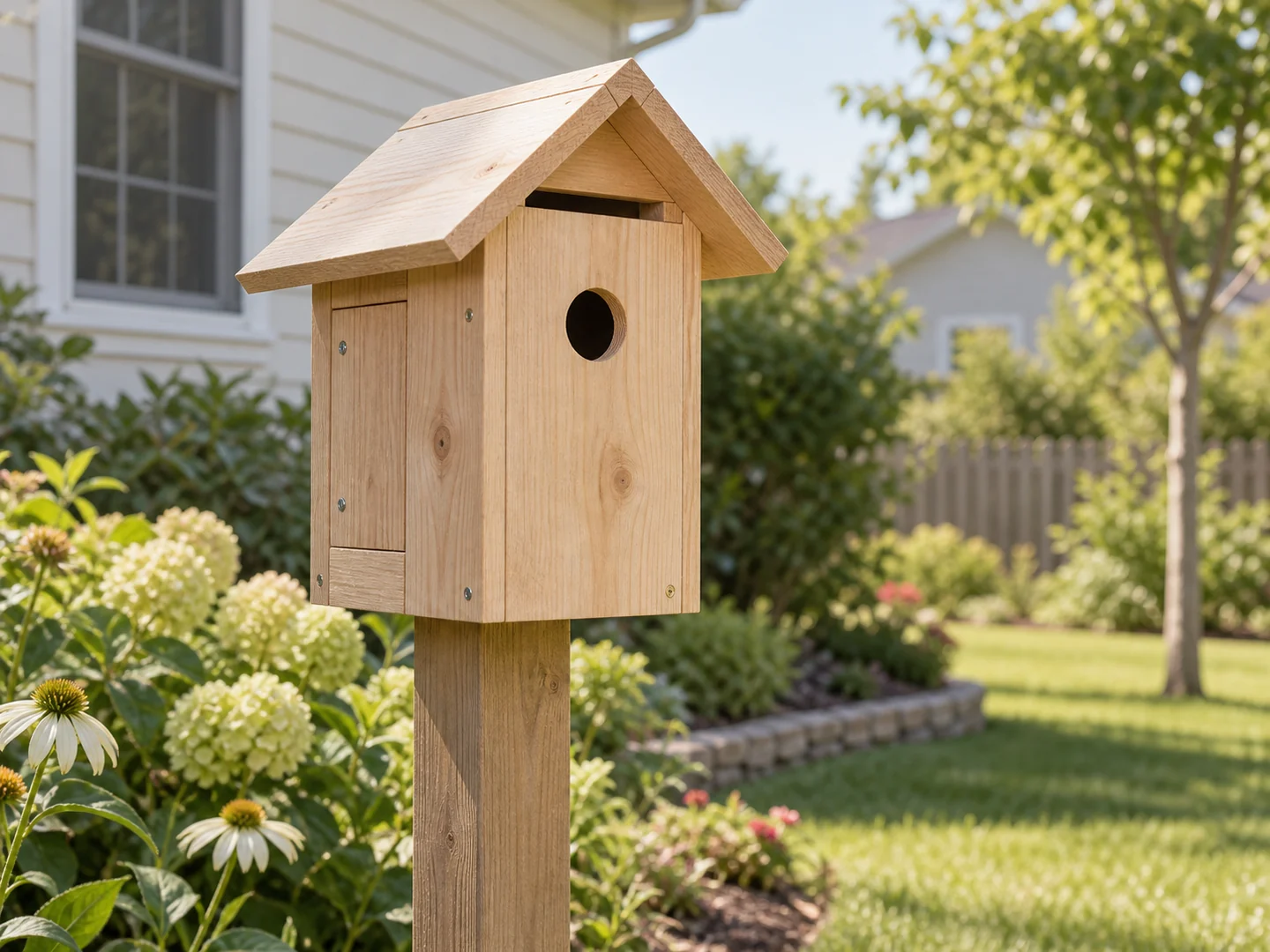
Easy Scrap Wood Birdhouse
A birdhouse is a satisfying outdoor idea when you start from a species-specific plan. Entrance size, cleanout, ventilation, drainage, and placement matter more than decorative details.
Read Project →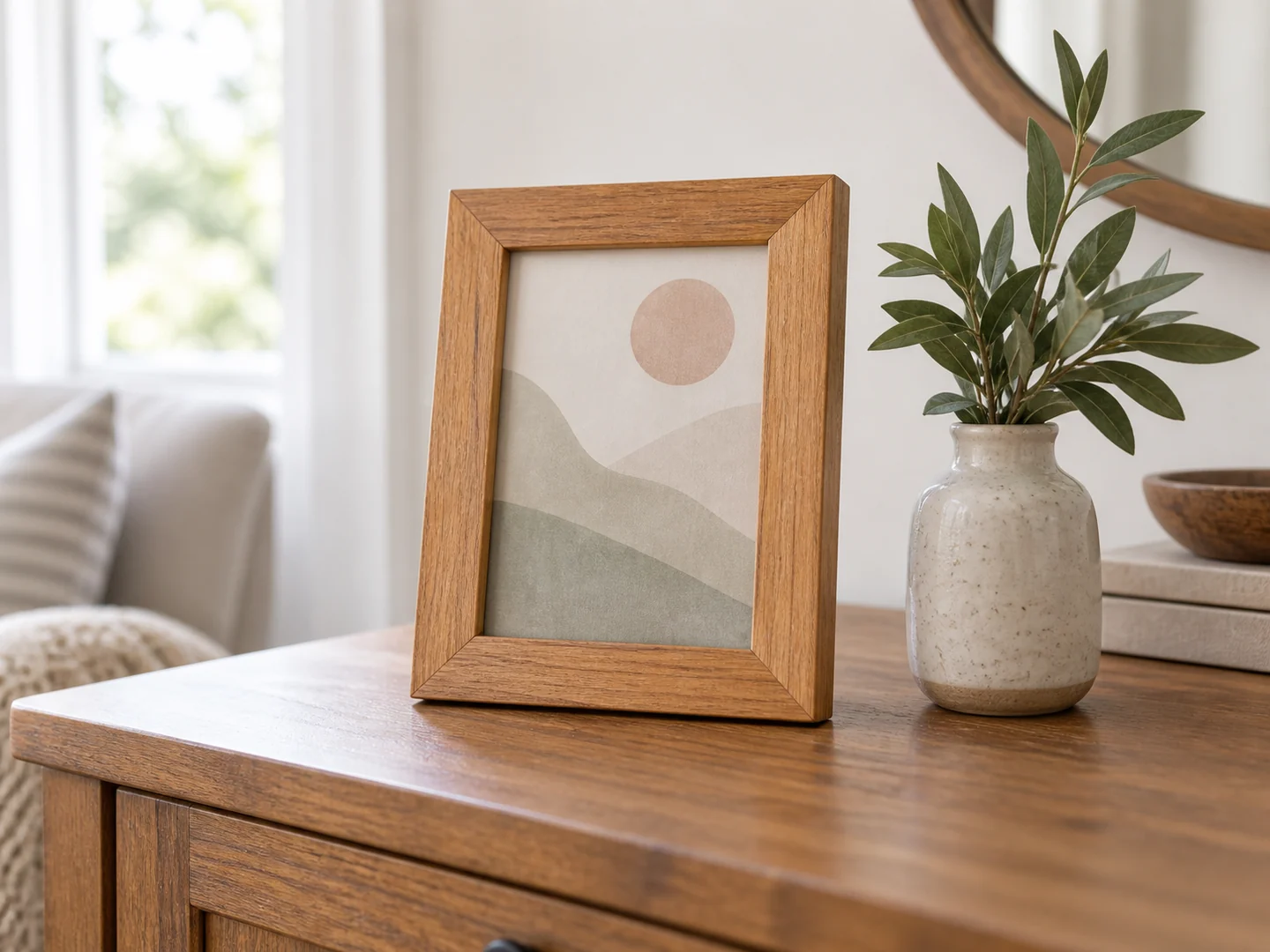
DIY Scrap Wood Picture Frame
A frame rewards accurate layout and careful corner fit. Start with the print and backing you want to display, then choose a suitable frame design instead of guessing the opening.
Read Project →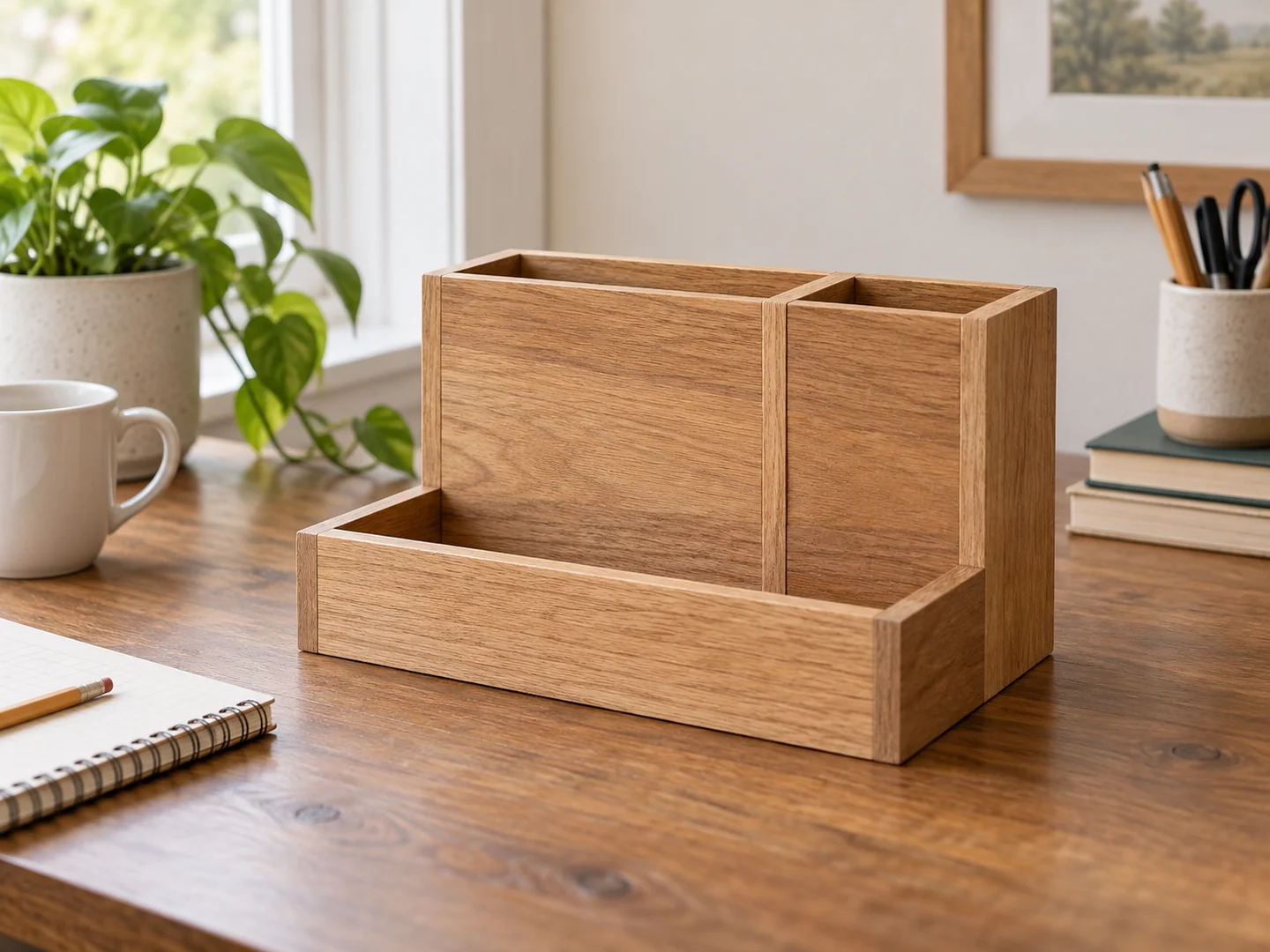
DIY Scrap Wood Desk Organizer
A desk organizer offers room to practice dividers and square assembly. Measure the pens, notes, or tools it should hold so the compartments solve a real desk problem.
Read Project →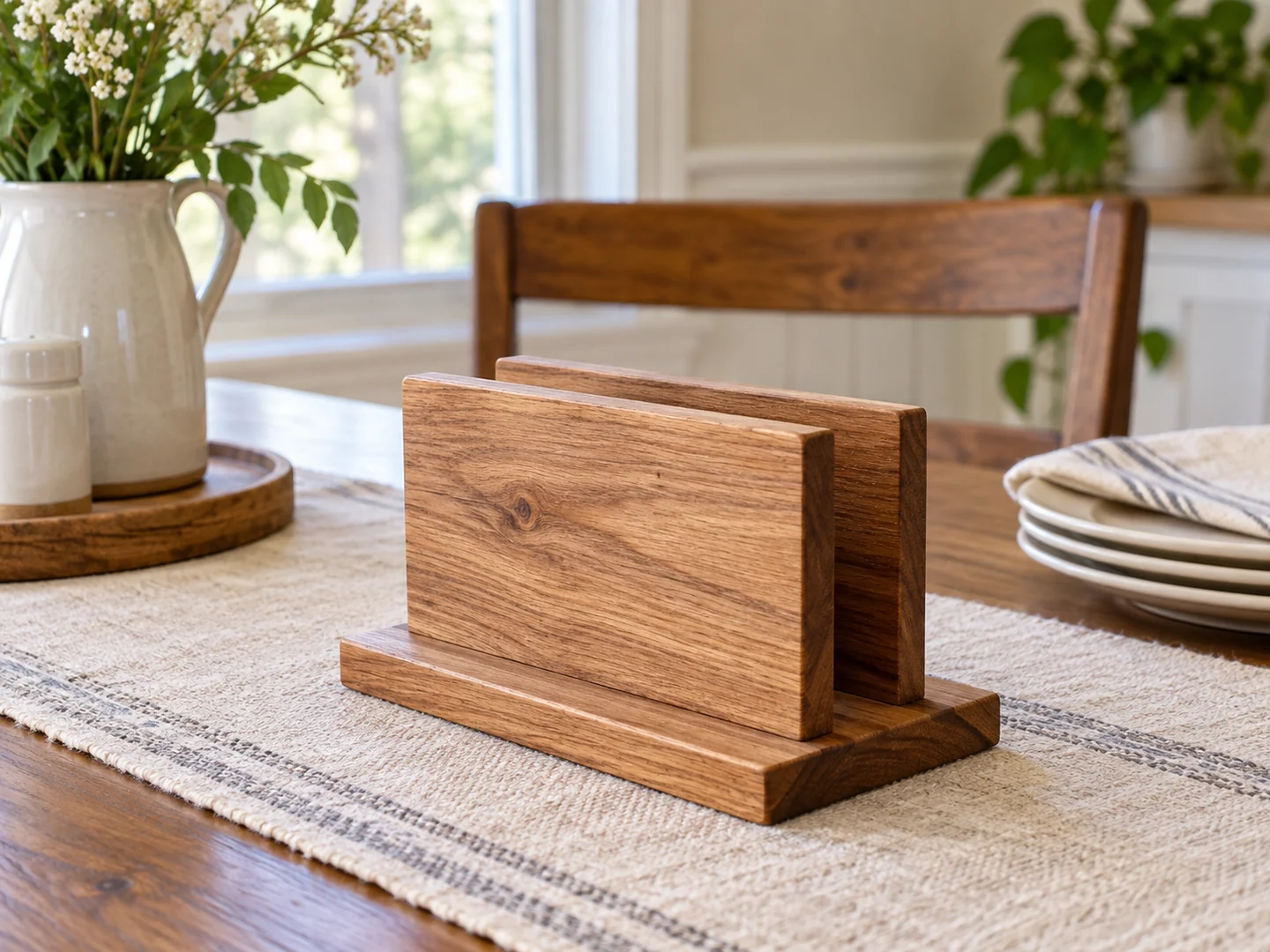
DIY Scrap Wood Napkin Holder
A napkin holder has a short list of parts and a clear purpose. Make the opening easy to reach and pay attention to smooth edges that contact hands and fabric.
Read Project →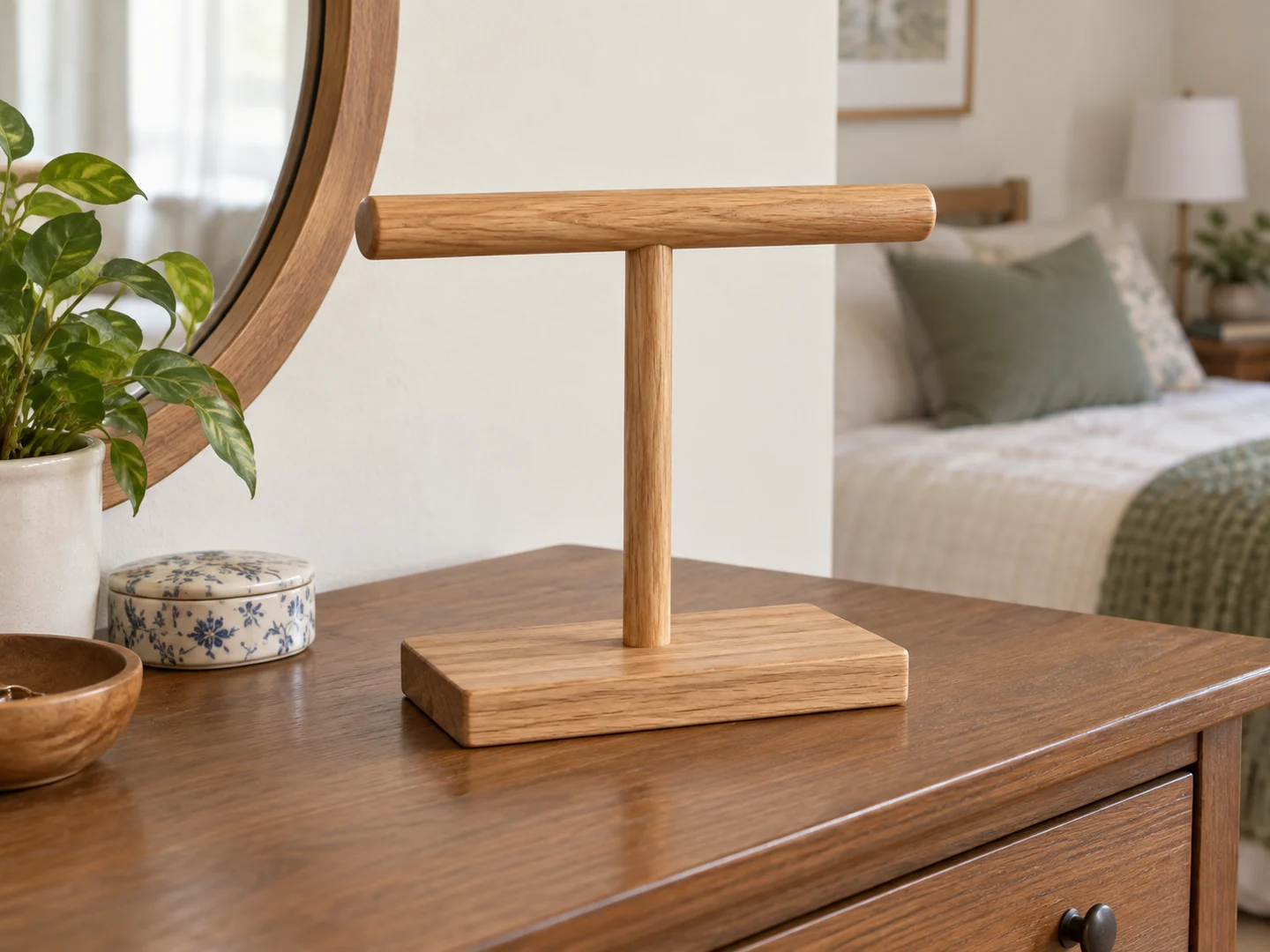
Easy Scrap Wood Jewelry Stand
A jewelry stand is a good study in hanging clearance. Lay out necklace lengths and base width before you decide where a bar or pegs should sit.
Read Project →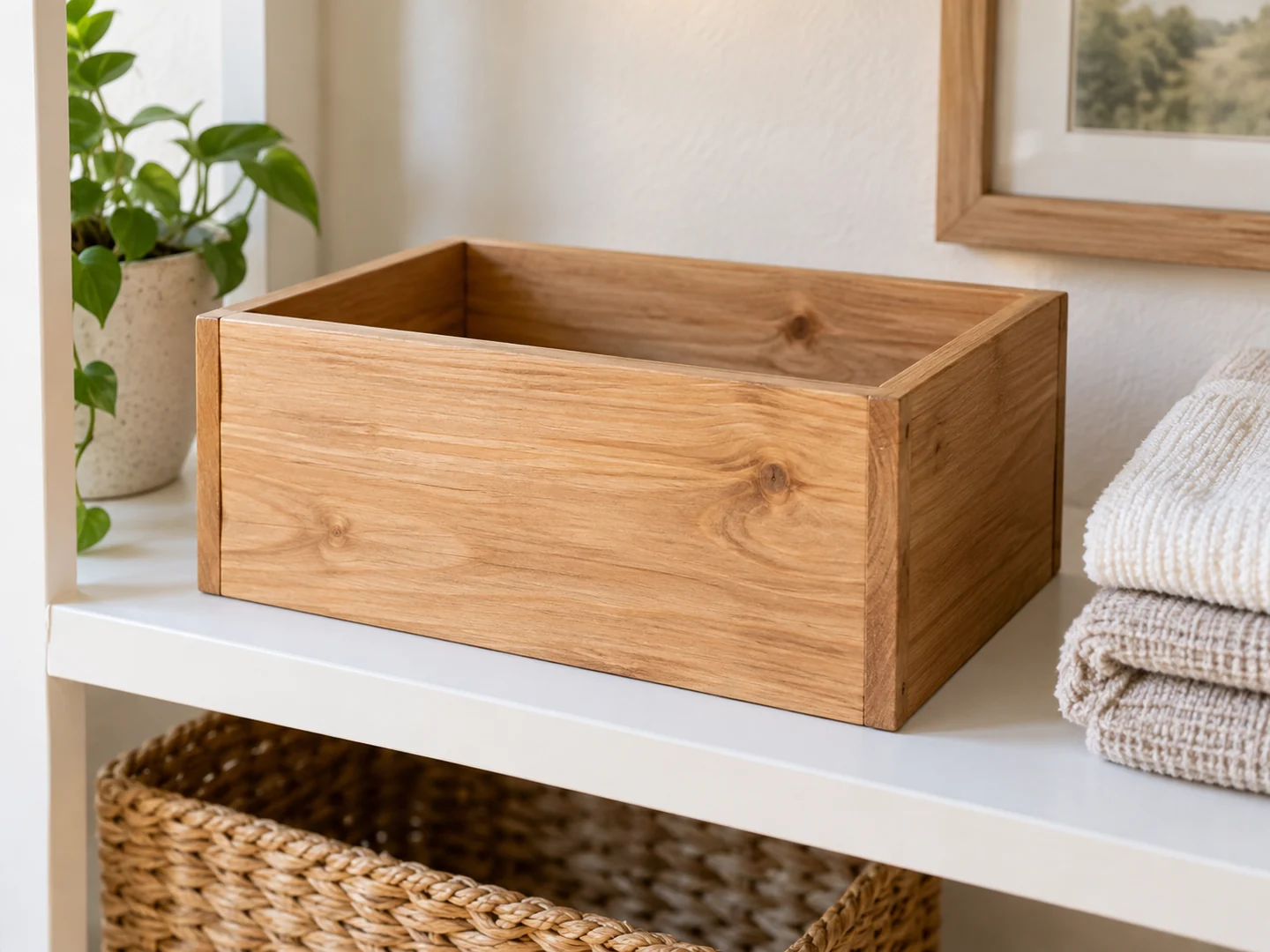
Easy Scrap Wood Storage Box
A small open box gives you repeatable square corners and bottom support to think about. Match the size and construction to the objects it will actually store.
Read Project →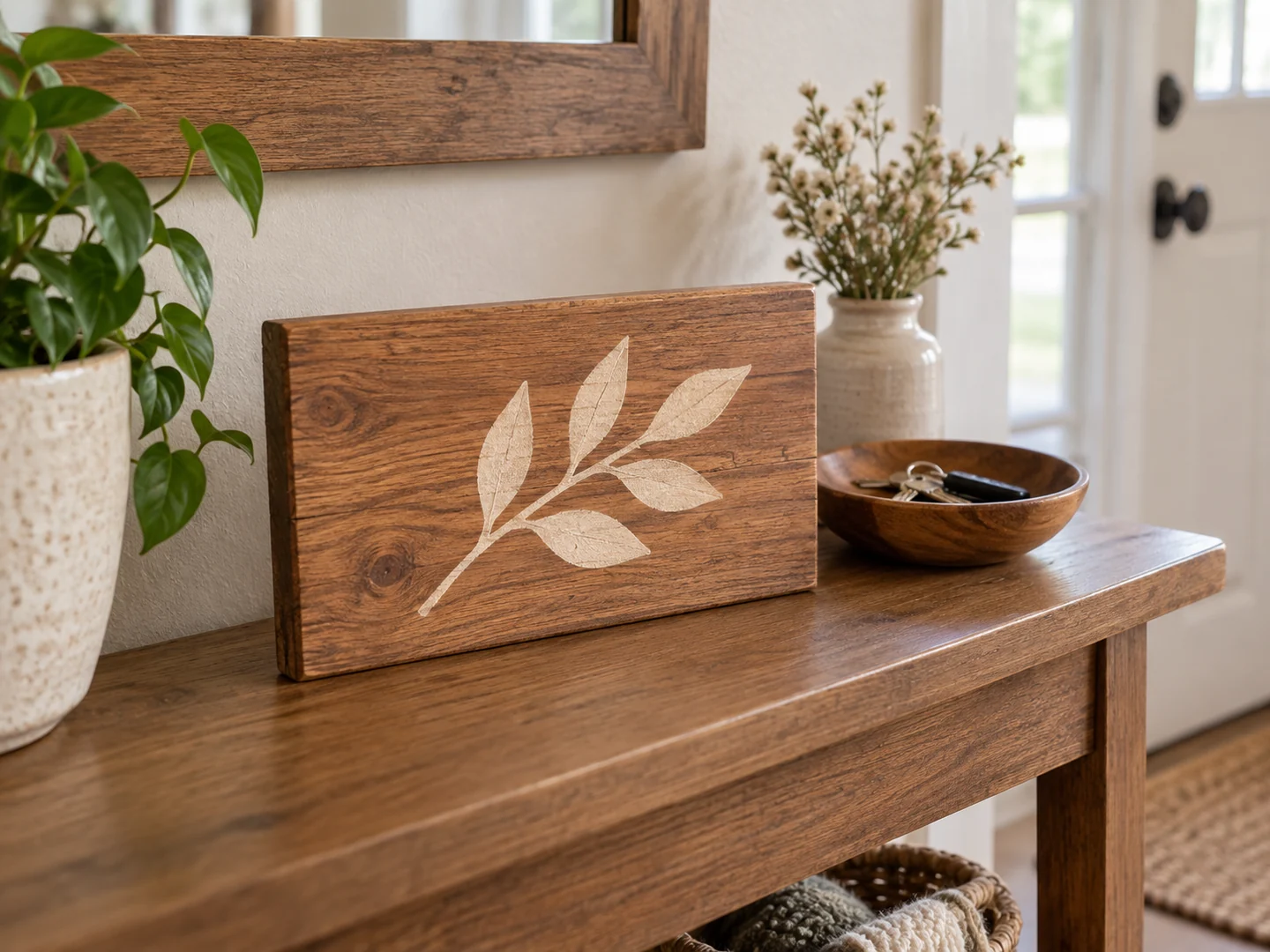
Easy Scrap Wood Sign
A decorative sign leaves room to try careful surface prep and a simple motif or lettering. Plan readable spacing on paper before painting; the illustration is inspiration, not a template.
Read Project →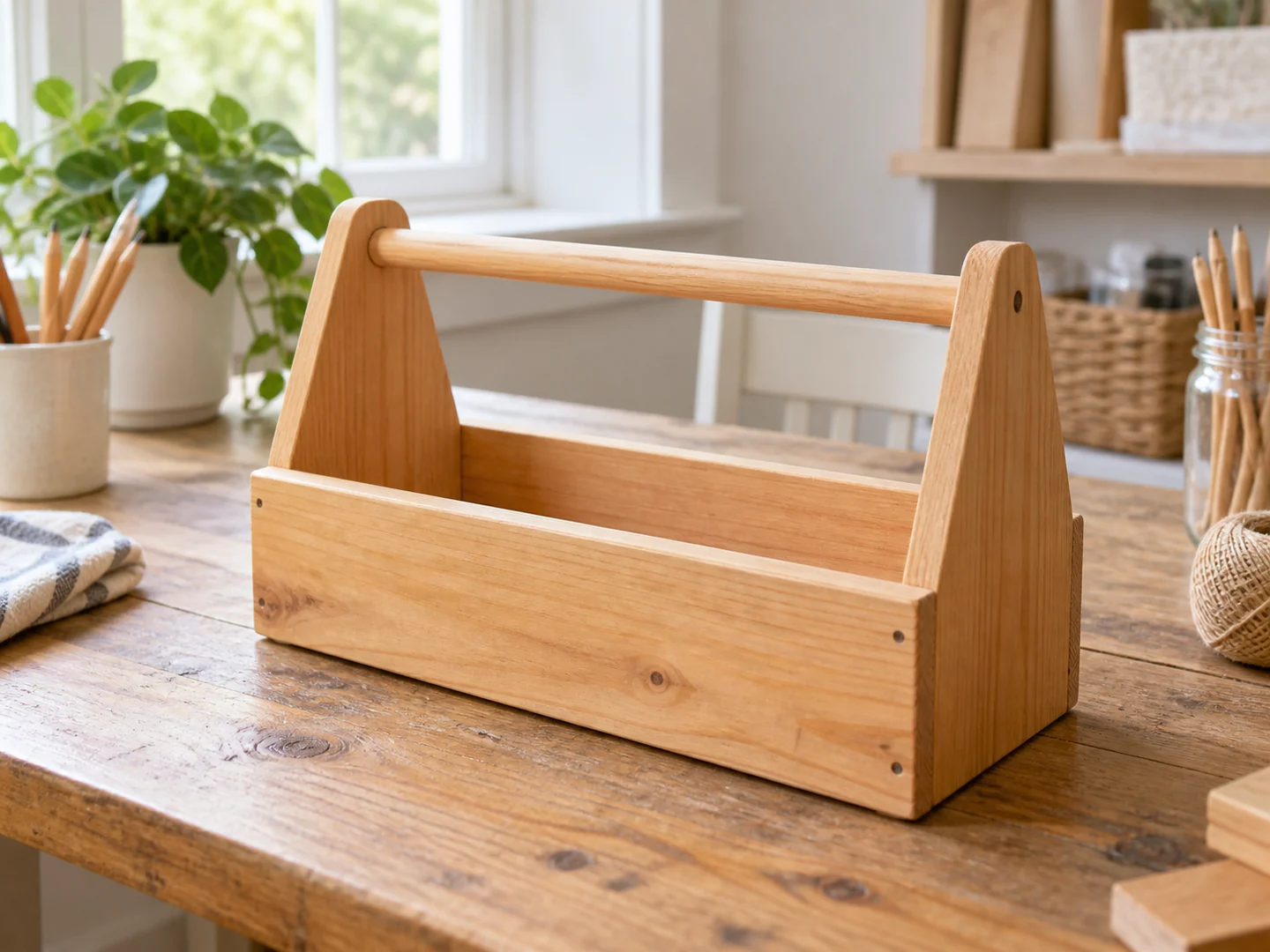
Easy Scrap Wood Storage Caddy
A handled caddy teaches how parts work together: the grip, sides, and supported bottom. Start with light everyday supplies and a plan intended for the contents.
Read Project →How to Choose Your First Woodworking Project
Pick an object you would use or give away, then write down what “finished” needs to mean. A phone stand should hold your actual device. A tray should carry the things you expect to move. A frame should fit an actual print. That small test of purpose prevents an attractive image from becoming an awkward object.
Look at your materials next. Inspect reclaimed pieces for hidden metal, decay, unknown treatments, and defects that would compromise a joint. Do not shrink supports on load-bearing projects merely to use an offcut. If your available stock does not match a suitable plan, choose another project or obtain appropriate material.
Finally, compare the guide and the plan with your tools. A project that needs a specialized cut or wall fixing may be less suitable for your first session than a small tabletop object. Dry-fit parts and check the intended use before glue or finish makes a change harder.
Basic Tools Beginners May Need
A measuring tape, square, pencil, suitable saw, drill, clamps, sanding supplies, and a stable work surface cover many small builds. The exact list changes with the design. Use the tool manufacturer’s instructions and plan’s materials list rather than assuming every project can be completed with the same kit. Eye, hearing, and dust protection should match the task and product you are using.
Safety Comes Before the Finish
Keep stock supported and hands clear of cutting paths. Check for hidden fasteners in reclaimed wood and use ventilation and protective equipment appropriate to dust, adhesives, and finishes. Follow finish labels for application and curing. For a wall shelf, birdhouse, or anything that carries meaningful weight, use guidance suited to the installation and intended load. The images on this site show concepts, not tested construction details.
Want to begin specifically with leftover lumber? Browse the 21-project scrap wood collection. If limited space or small gifts are your priority, compare the small woodworking projects guide.
Looking for a More Detailed Plan?
TedsWoodworking is a separate plans collection to explore. Check the current contents, tool requirements, and terms before purchasing; we have not verified that these exact pictured projects are included.
Browse the Woodworking Plans →