Affiliate Disclosure: This page contains affiliate links. If you purchase through one of these links, we may earn a commission at no additional cost to you. Learn more.
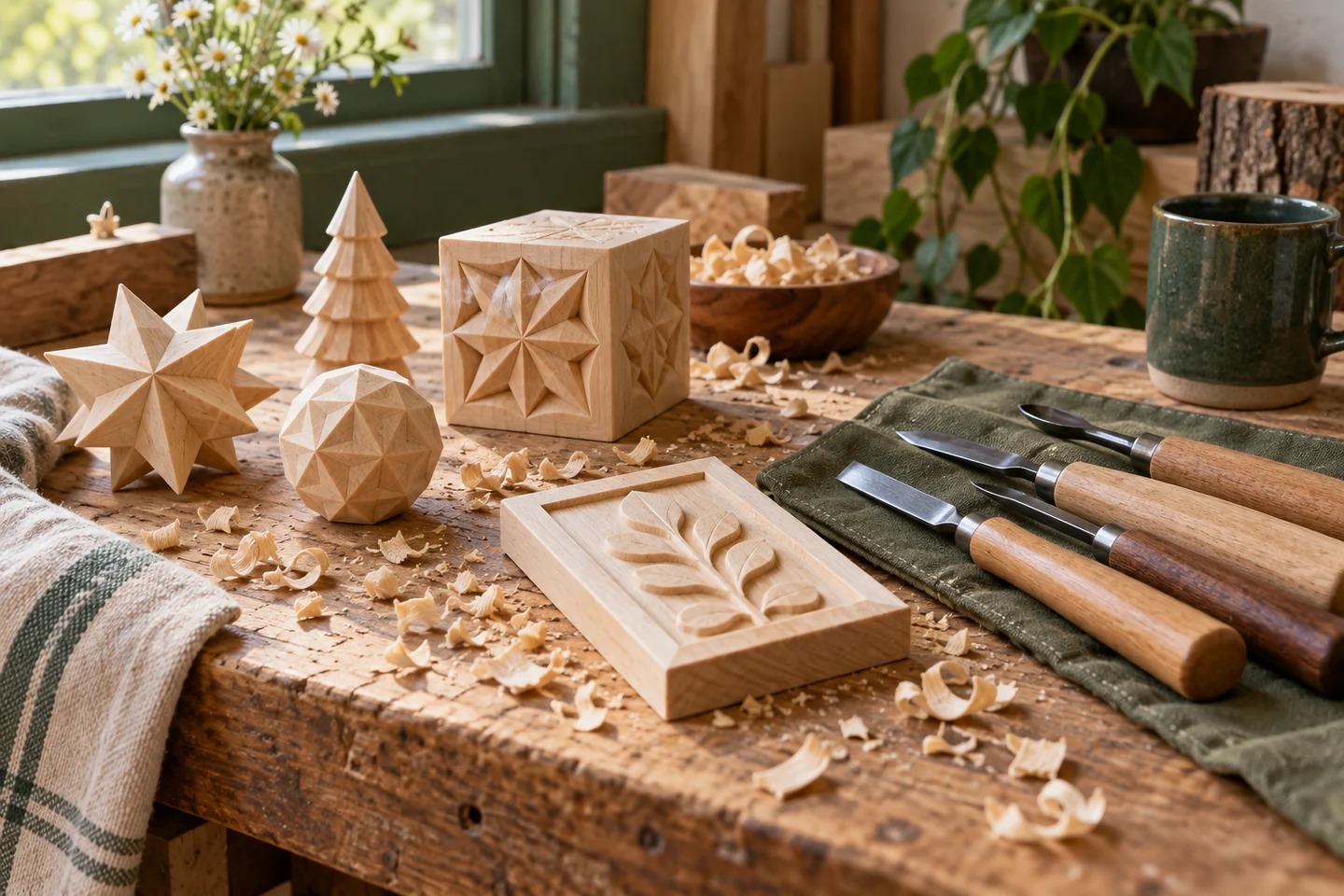
Begin with a shape you can recognize after a few calm sessions, not an intricate sculpture. Wood carving can mean patterns on a flat surface, a shallow raised design, or a small three-dimensional object. This guide helps you choose an approachable direction and a safe learning path. It is inspiration rather than a blade-technique tutorial.
What Makes a Good First Carving Project?
Look for a small idea with broad forms and few fragile details. A geometric motif is easier to plan than an expressive animal face; a simple ornament has fewer decisions than a functional spoon. Start with a practice piece so you can learn how the selected wood behaves before working on a finished object.
Your project should fit a safe work position and a tool you know how to maintain. If a design requires a cut you cannot control, choose a simpler pattern or learn it with qualified instruction. Accuracy comes from patient observation and appropriate practice, not force.
Beginner-Friendly Wood Carving Ideas
Simple geometric motifs
Triangles, stars, diamonds, and repeated borders let you focus on spacing and rhythm. Begin with a clear pencil design on a practice board. A single motif can become an ornament or a decorative panel without adding more kinds of cuts.
A small decorative block
A block with a softened outline or a single carved face can stand alone on a shelf. It keeps the overall form uncomplicated. The goal is to observe proportion and surface texture rather than chase tiny details.
Simple spoon carving inspiration
A spoon shape is appealing, but a usable spoon introduces questions about shaping, wood choice, and a finish appropriate to food contact. Treat it as a later learning goal. For a first attempt, choose a guided class or a suitable plan rather than treating a concept image as a food-safe design.
A small animal silhouette
A bird or fish can be reduced to one recognizable outline. Avoid delicate legs, tails, or facial details at the start. Rough proportion matters more than perfect symmetry, and an oversized practice shape is easier to evaluate.
Basic relief ideas
A leaf, sunburst, or simple wave on a flat panel introduces depth while retaining a stable backing. Keep the subject readable with modest contrast between the background and raised shape. Use a suitable tutorial for the specific tools and support method.
Simple ornaments
A hanging shape can be a satisfying seasonal or gift project. Plan how it will hang and protect fine edges from breakage. Do not assume a pictured ornament provides a tested method for drilling or suspension.
Basic Tools
Carving tools vary with the style: some projects use a carving knife, while surface designs may use specialized gouges or chisels. A secure work surface, appropriate holding method, sharpening or maintenance equipment, and suitable protective gear are part of the setup. Choose tools according to an instructional resource for that particular project rather than buying a large assortment at once.
Choosing Wood
Look for clean, sound wood suited to the chosen carving style. Basswood is commonly used in beginner carving resources because it works readily and has relatively even grain. Inspect any blank for cracks, hidden metal, unknown treatments, or defects. Reclaimed lumber is not automatically appropriate for carving. Ask the supplier or instructor about species and condition if you are unsure.
Safety Before Making Chips
Sharp tools can cause serious cuts. Work without distractions, secure the material appropriately, and keep hands away from the intended cutting path. Use protective equipment suited to the tool and technique, and follow tool manufacturer instructions. Keep edges maintained; forcing a dull tool increases risk. Do not carve on your lap or improvise a grip from a photograph. Seek hands-on instruction for unfamiliar cuts. Woodcraft’s carving safety discussion is a useful starting reference.
How to Start Small
Choose one simple subject, one suitable wood blank, and an instructional resource for your tool. Practice on a separate piece, then decide whether the result should be decorative or functional. Take breaks and inspect the form under good light. If you enjoy shaping small objects with a knife, the whittling projects guide focuses specifically on portable forms and a slower hobby rhythm.
Related Woodworking Ideas
Carving can add a restrained detail to a wooden picture frame or small sign, but use sound material and a suitable process. If you would rather assemble than carve, browse easy woodworking projects for beginners.
Exploring Plans for Your Next Project?
TedsWoodworking is a general woodworking plans collection. Review its current catalog before purchasing; we have not confirmed that it includes the carving ideas shown here. Dedicated carving instruction may be a better fit for blade skills.
Browse the Woodworking Plans →