Affiliate Disclosure: This page contains affiliate links. If you purchase through one of these links, we may earn a commission at no additional cost to you. Learn more.
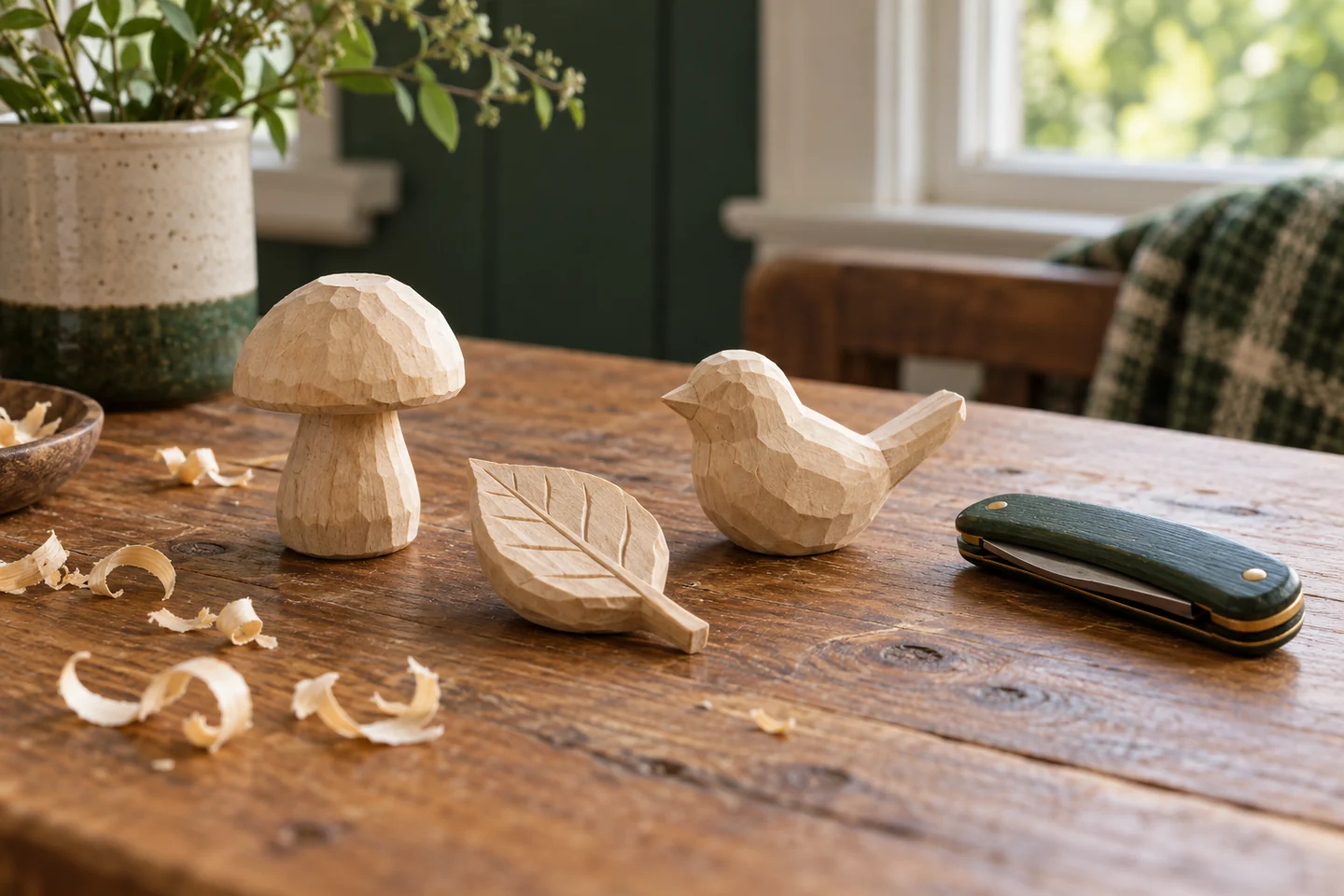
Whittling is a way to spend focused time shaping a small piece of wood. A simple leaf, rounded mushroom, or abstract bird can make a satisfying goal without demanding a full workshop. The pleasure is in noticing the changing shape, not in finishing quickly. This page offers project choices and planning questions; it does not teach knife cuts.
What Counts as Whittling?
Whittling usually centers on shaping a small object with a carving knife. It sits within the broader world of wood carving, which also includes flat patterns and relief work. Here the emphasis is on modest forms that can be held or displayed, the rhythm of a screen-free hobby, and a workspace where the material and your hands remain under control.
A portable project is not an invitation to work anywhere. Choose a stable, well-lit place with a safe way to contain shavings, store the tool, and protect people nearby. If you are new to sharp tools, learn safe handling with qualified instruction before trying a shape.
Six Simple Whittling Ideas
1. A smooth practice pebble
Begin with an abstract rounded form. There is no animal anatomy or exact measurement to match, so you can pay attention to proportion and surface quality. Keep it large enough to handle safely and use a suitable practice blank.
2. A leaf shape
A leaf has a clear silhouette that can remain simple. A broad outline is enough for a first version; vein details can wait. Compare a real leaf to your sketch, then choose an instructional resource appropriate to your tool.
3. A small mushroom
A cap and stem make a recognizable object with few major parts. The transition between them is the main visual question. An illustrative photo is not a plan for cutting that area, so do not copy an apparent edge or grip from it.
4. An abstract bird
A bird can be reduced to a rounded body and a suggestion of a beak or tail. Avoid thin projecting wings on an early attempt. Look for a sturdy silhouette rather than minute feathers.
5. A simple hanging ornament
A plain star, drop, or tree silhouette can become a decorative object. Plan the hanging method separately and avoid thin, fragile points. Decorative use is different from a toy or an object intended for children.
6. A small decorative marker
A simple shape could mark a plant pot or identify a drawer, but moisture and handling affect the finish and material. Decide where it will live before promising outdoor durability.
Choosing a First Blank and Tool
Use clean, sound wood suitable for carving, without hidden metal, cracks, or unknown treatment. Beginner resources often mention basswood for its workable, even character, but the right blank depends on the project and your instruction. A purpose-made carving knife, a maintenance method, and appropriate protection are more useful than a collection of unfamiliar blades. Ask an instructor or reputable supplier to match the tool to the project.
Set Up for a Relaxing Session
Good light, a stable surface, and a short, realistic goal make a screen-free session more enjoyable. Lay out the blank, a simple reference sketch, protective equipment, and a place for shavings. Keep distractions away. Put the tool safely aside whenever you stop to evaluate the form or take a break.
Some people enjoy repeating the same simple object to notice small improvements; others prefer a single keepsake. Neither approach requires pretending that every attempt turns out perfectly. A practice piece can be useful even when it never becomes a gift.
Safety Comes First
A carving knife can cause serious injury. Keep hands out of the cutting path, control the material with a suitable method, maintain the tool, and follow its manufacturer’s guidance. Use suitable cut protection and learn unfamiliar movements with qualified instruction. Avoid carving on your lap or while distracted. If you need more detail on safe setup, Woodcraft’s introductory whittling resource discusses tools and protection.
What to Try Next
When small handheld shapes no longer feel new, explore wood carving ideas such as geometric patterns or shallow relief designs. If you want a break from blades, beginner woodworking projects offer assembly and finishing skills. For other low-screen activities, see offline hobbies.
Looking Beyond Whittling?
TedsWoodworking is a broader woodworking plans collection you can explore. Check its current catalog before purchase; the small whittling shapes shown here have not been verified as included plans.
Browse the Woodworking Plans →