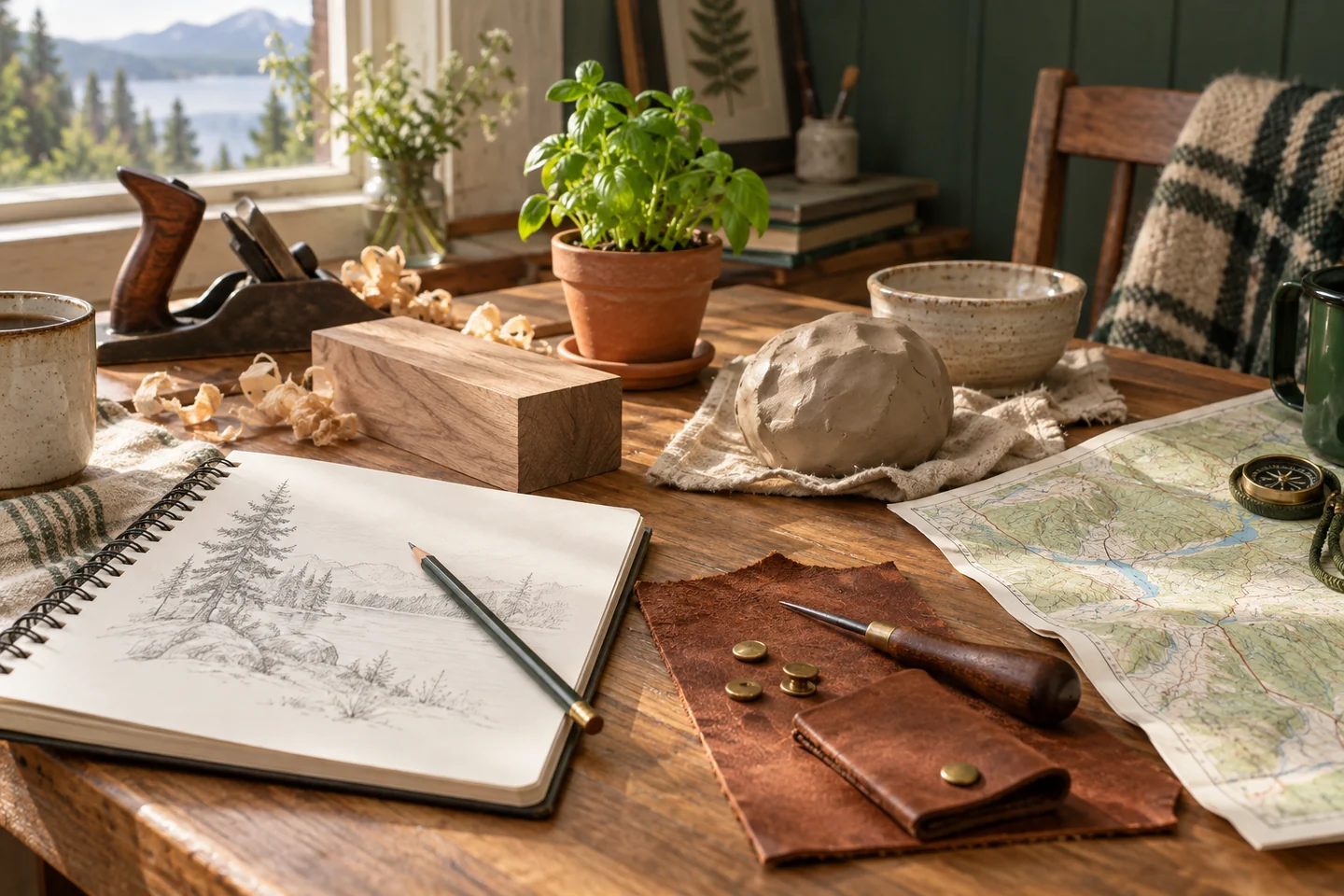
If you want less screen time, choose an activity with a clear first action. A hobby does not need to become a side business or a major commitment. The list below starts with hands-on making, then moves through quiet creative activities and outdoor options. Pick one that fits your available space, budget, and season.
This guide is written for men searching for screen-free ideas, but the hobbies are for anyone. If woodworking interests you, follow the beginner project route from idea to a useful object rather than shopping for an entire workshop first.
Hands-On Making Hobbies
1. Woodworking
Build something practical for a desk, kitchen, or entryway. A small project gives you a clear result and a reason to practice measuring and finishing. Start with the 15 easy woodworking projects for beginners guide, then choose an individual project that suits your tools and workspace. Use appropriate plans and safety guidance for the build.
2. Wood carving
Explore shape and texture on a small blank rather than assembling boards. Geometric motifs, decorative blocks, and shallow relief ideas offer different starting points. Sharp tools require careful instruction. Compare the choices in easy wood carving ideas for beginners.
3. Whittling
Try a simple handheld shape when a quiet, focused session appeals to you. A leaf or rounded form gives you something to observe as it changes. Set up a safe work area and learn knife handling before starting. See whittling projects for beginners.
4. Pottery
Clay offers a different kind of handwork, whether you try a pinch pot or join a local class. A first session can be about the feel of the material rather than a perfect finished object. Check whether a studio provides tools and firing before buying equipment.
5. Leathercraft
A small stitched or folded item can introduce material selection, layout, and finish. Begin with a reputable beginner class or kit and learn safe use of punches and cutting tools. Think about an object you would actually carry, such as a simple card sleeve.
6. Model building
Paper, wood, or plastic model kits offer measured work in a compact space. Choose a kit that matches the time you want to spend and check ventilation requirements for adhesives and paints. The fun may be in careful assembly more than display.
7. Home DIY
A modest repair or organizing project can make an ordinary room easier to use. Begin with a task inside your skill level, such as planning storage or refreshing a finish. Leave electrical, structural, and other regulated work to qualified people where required.
Quiet Creative Hobbies
8. Drawing
A pencil and sketchbook are enough to start observing shapes around you. Draw a mug, plant, or room corner for a few minutes, then keep the page as a record of what you noticed rather than a test of talent.
9. Journaling
Writing by hand can give a day a calmer ending. Try a few lines about what you made, cooked, or saw outside. A plain notebook works; elaborate prompts and tracking systems are optional.
10. Cooking
Pick one recipe that uses ingredients you already enjoy and give it your full attention. Preparation, timing, and tasting create a practical sequence away from a feed. Use food-safety guidance that fits the ingredients and equipment.
11. Photography
A dedicated camera can encourage deliberate walks and attention to light. You can also take a short photo outing without posting anything afterward. Try one theme, such as textures or doorways, and look at the results later rather than during the walk.
Outdoor and Living Hobbies
12. Gardening
One herb pot or small bed can introduce seasonal care without a large yard. Choose plants suited to your light and climate. Tending a living thing can be a recurring reason to step away from a screen.
13. Fishing
Fishing can be a quiet outdoor practice, but it requires attention to local rules, conditions, and equipment. Learn from a local guide or club and check licenses and access before a trip.
14. Hiking
A nearby trail can be enough for a first outing. Match the route to your fitness, daylight, weather, and supplies. Let someone know your plan when appropriate, and use reliable local trail information.
15. Cycling
A short neighborhood ride can be a repeatable habit. Start with a safe route and a bike in good working order, using protective equipment and road rules suited to your location. The destination can be as simple as a park or café.
How to Pick One Without Turning It Into Homework
Choose the hobby whose first session you can describe in one sentence: “I will sketch a plant,” “I will visit a nearby trail,” or “I will compare three small woodworking builds.” Prepare only what that session needs. If you enjoy it, make room for another. If you do not, change the activity rather than treating the first attempt as a failure.
For a woodworking route, start with beginner-friendly projects. If you already have usable offcuts, browse the scrap wood collection. Both can lead to a specific guide and, if you want one, a more detailed plan. The hobby itself remains the reason to begin.